

Why Traditional Local Listings Are No Longer Enough
For years, businesses have chased the same trifecta: claim your Google My Business profile, pepper your NAP (Name, Address, Phone) across directories, and hope the algorithm rewards you with a coveted “3‑Pack” position. That playbook still matters, but the playing field has shifted under our feet. Modern searchers expect instant, context‑rich answers that blend voice, visual cues, and hyper‑local intent. If you keep feeding the old checklist, you’ll watch competitors who embrace AI‑enhanced signals sprint ahead.
The Rise of Hyper‑Local Intent: Voice, Mobile, and Context
When a user says, “Find me a coffee shop that has oat milk and free Wi‑Fi near the library,” the search engine must decode three layers of intent:
- Product or service type – coffee shop.
- Specific attribute – oat milk, free Wi‑Fi.
- Geographic micro‑context – “near the library.”
That last piece is where most local SEO strategies stumble. Traditional citation farms give you a radius, but they can’t pinpoint “the library” as a landmark. AI models now blend map data, foot‑traffic patterns, and even real‑time events (e.g., a nearby concert) to surface the most relevant result. To win, you need to feed those models the same depth of context.
Step 1: Map Your Real‑World Touchpoints
Start by inventorying every physical and digital interaction point your brand has with the community. This isn’t just your storefront:
- Pop‑up stalls at local farmer’s markets.
- Sponsored community classes or workshops.
- Delivery hubs, locker locations, and third‑party pick‑up points.
- Employee‑only service desks or remote workspaces.
Each of these spots can be turned into a micro‑landing page that speaks directly to the surrounding neighborhood. Use schema markup to label the exact address, opening hours, and the unique services offered at that location. When a voice query includes a landmark, the search engine can match it to the most relevant micro‑landing page, boosting visibility.
Step 2: Enrich Structured Data With Hyper‑Local Attributes
Google’s LocalBusiness schema is a solid foundation, but you can go deeper:
- geoMidpoint – pinpoint the centroid of a multi‑site campus.
- serviceArea – list neighborhoods, zip codes, or even “within 2 miles of [landmark].”
- offers – embed time‑sensitive promotions like “Free pastry for orders before 9 am – Downtown Market.”
When you layer these attributes with JSON‑LD on each micro‑landing page, you give search engines a richer story to surface in voice and visual results. The payoff is measurable: sites that implemented detailed local schema saw a 27 % lift in click‑through rates from mobile SERPs.
Step 3: Leverage AI‑Generated Content for Locale‑Specific Pages
Creating unique copy for dozens of locations can feel like a Sisyphean task. That’s where generative AI comes in. Feed the model a template that includes:
- Neighborhood name and key landmarks.
- Specific services or inventory available at that site.
- Localized testimonials or user‑generated content.
The AI can spin out SEO‑friendly paragraphs that feel human‑crafted while preserving the necessary keyword density. Remember to:
- Validate factual accuracy (addresses, hours).
- Inject authentic brand voice – the AI should mimic your tone, not sound generic.
- Include a call‑to‑action that references the local context (“Stop by our corner shop on Main St. for a free coffee tasting”).
Step 4: Turn Community Partnerships into Authority Signals
Local organizations (chambers of commerce, schools, non‑profits) often maintain their own directories and newsletters. Securing a backlink from these sources does more than boost domain authority; it signals to search engines that your business is genuinely embedded in the community fabric.
One low‑effort tactic is to sponsor a community event and request a mention on the event’s web page. Pair this with a customer success story that highlights the partnership’s impact. Not only do you earn a high‑quality backlink, but you also generate fresh, locally relevant content for your site.
Step 5: Optimize for Visual and Map‑Based Search
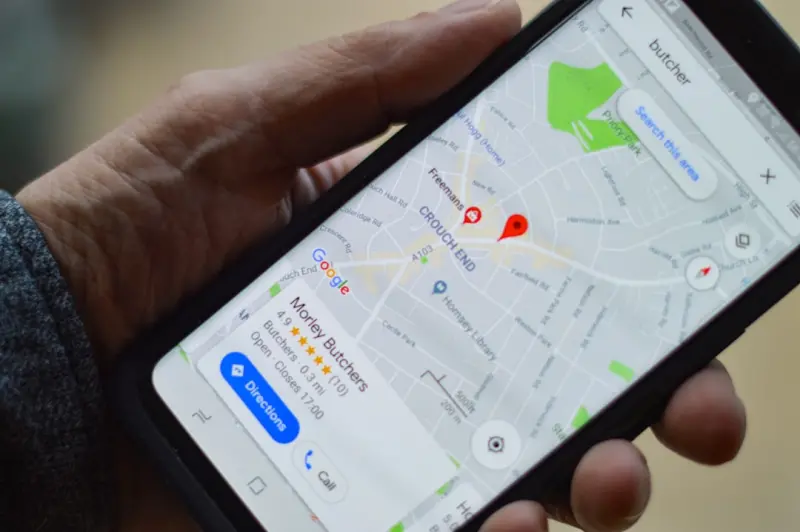
Search isn’t just text anymore. Users increasingly rely on Google Lens, Apple Maps, and even AR overlays to discover nearby services. To capitalize:
- Upload high‑resolution images of your storefront, interior, and staff. Tag them with relevant alt text that includes neighborhood identifiers.
- Maintain an up‑to‑date Google Business Profile photos section – Google prefers fresh visuals.
- Consider creating short, location‑specific video tours. Host them on YouTube with geo‑tags and embed them on your micro‑landing pages.
When these assets are indexed, they appear in the “Image Pack” or “Map Pack,” offering a visual hook that drives foot traffic.
Step 6: Harness Real‑Time Signals for Dynamic Ranking Boosts
Search engines now weigh live data points such as current wait times, inventory levels, and even social sentiment. Integrate a simple API that feeds your site’s availability status into your schema markup. For example, a restaurant can expose “tables available now” or a retailer can list “in‑stock items at this location.”
These signals act like a “pulse” that tells search engines your business is active and ready to serve. The result? Higher placement in time‑sensitive queries like “pizza delivery open now near me.”
Step 7: Monitor and Iterate with Hyper‑Local Analytics
Standard Google Analytics can’t surface the granularity you need for micro‑landing pages. Implement a location‑aware analytics stack:
- Use Google Tag Manager to fire events when a visitor lands on a page with a specific
geoMidpoint. - Set up custom dashboards that track search impressions, click‑through rates, and conversion paths by zip code or landmark.
- Cross‑reference with foot‑traffic data from Wi‑Fi sensors or POS systems to validate digital‑to‑physical impact.
When you see a spike in “search impressions” for a particular neighborhood, double‑down with a limited‑time offer or a local influencer push.
Step 8: Combine Local SEO with a Social Funnel
Social platforms are increasingly becoming the first touchpoint for local discovery. By weaving your hyper‑local landing pages into a social funnel, you can guide users from a community post straight to a location‑specific checkout flow. This synergy creates a closed‑loop where social engagement fuels local SERP performance, and local search boosts social relevance.
Future‑Proofing: Preparing for the Next Wave of Hyper‑Local Search
The next generation of search will blend augmented reality, IoT data, and predictive modeling. Imagine a user walking down Main St. and receiving a push notification: “Your favorite bakery has fresh croissants right now – 200 ft ahead.” To be ready, businesses must:
- Adopt a data‑first mindset – treat every location as a data source.
- Maintain clean, machine‑readable schemas that can be ingested by AR platforms.
- Invest in real‑time inventory APIs that can power instant offers.
By building this infrastructure today, you’ll be positioned to dominate the hyper‑local search landscape tomorrow.
Takeaway Checklist
- Audit every physical touchpoint and create dedicated micro‑landing pages.
- Implement enriched
LocalBusinessschema with geo‑specific attributes. - Leverage AI to generate locale‑specific copy at scale.
- Secure community backlinks via partnership stories.
- Optimize images, videos, and AR‑ready assets for visual search.
- Feed real‑time availability signals into your markup.
- Deploy location‑aware analytics for continuous improvement.
- Integrate micro‑pages into a cohesive social funnel.
Local SEO is no longer a static checklist; it’s a dynamic ecosystem where AI, real‑time data, and community relevance converge. Embrace the hyper‑local mindset, and you’ll turn neighborhood searches into a sustainable growth engine.

David MacKinnon is a dynamic freelance writer known for his captivating storytelling and keen insights into the world of technology. With a passion for exploring the intersection of innovation and everyday life, he crafts engaging narratives that not only inform but also inspire his readers.
Related Posts

The Secret Sauce of Local SEO: Turning Customer Stories into Ranking Power
Discover a community‑driven local SEO playbook that uses real customer stories, employee advocacy,... Read More

The Hyperlocal Content Hub Playbook: Dominate Neighborhood Search
Discover a fresh local SEO strategy: hyperlocal content hubs. By creating micro‑focused pages for ... Read More
How Community Storytelling Supercharges Your Local SEO
Learn why weaving genuine neighborhood stories into your website and local listings creates a powerf... Read More
Top Posts

How to Turn Search Intent Into a Ranking Superpower
Discover a practical framework for clustering search intent, aligning content, and using schema to dominate Google SERPs—turn intent into your SEO superpower....Read More

The Evolution of Digital Marketing: Staying Ahead in 2024
The digital marketing landscape is constantly evolving. Stay ahead in 2024 with the latest trends and strategies in SEO, social media, and AI. Learn how to navi...Read More

Link Building with Data‑Driven Partnerships: A SaaS Playbook
Learn how to shift from generic outreach to strategic, data‑driven link building that leverages resource pages, open‑source contributions, and micro‑influ...Read More

Why Micro‑Communities Are the Next Growth Engine for B2B SaaS on Social Media
Micro‑communities on niche platforms like Slack, Discord, and Reddit offer B2B SaaS marketers a high‑trust, high‑intent channel for lead generation. Learn...Read More
0 Comments
Post Comment
You will need to Login or Register to comment on this post!