
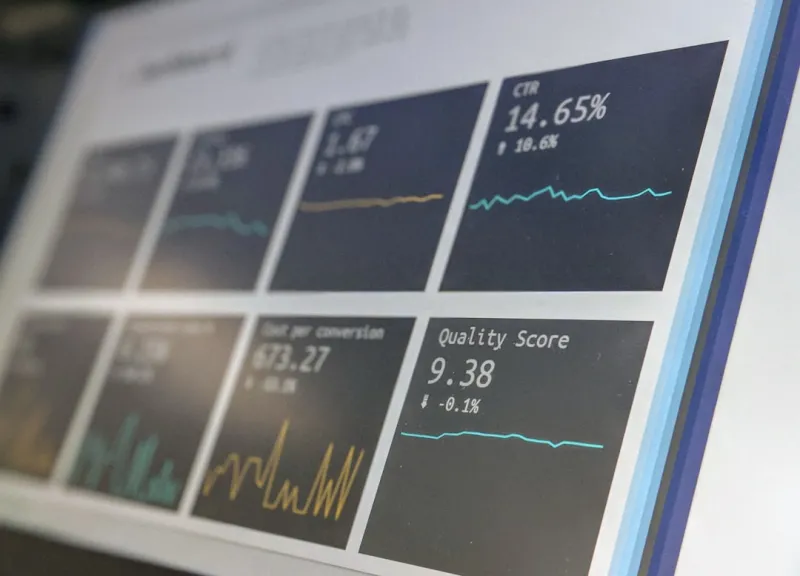
Why the Old Data‑Only Playbook Is Crumbling
In 2026 the digital marketing landscape feels like a high‑speed train that stopped caring about raw numbers alone; every click, impression, and conversion metric is now filtered through a lens of human intent, meaning marketers must ask not just “what did they do?” but “why did they feel compelled to do it?” Human connection has become the new currency, and the data that once drove campaigns now serves as a supporting cast, offering context for narratives that resonate on an emotional level rather than merely satisfying algorithmic thresholds. This shift forces us to rethink our KPIs, moving from vanity metrics toward engagement quality scores that measure sentiment, brand affinity, and the depth of community interaction, turning the traditional funnel into a circular ecosystem where feedback loops constantly inform creative direction.
The Saturation of Data and the Rise of AI‑Powered Insight
While data overload remains a persistent challenge, the advent of generative AI tools in 2026 means we can now synthesize massive datasets into actionable stories in minutes, allowing marketers to uncover hidden patterns that were previously buried under noise; these tools translate raw logs into personas, journey maps, and predictive models that guide every touchpoint. Yet, the power of AI is only as good as the human intuition that validates its output, creating a collaborative workflow where algorithms propose hypotheses and seasoned marketers test them against real‑world reactions. This symbiotic relationship accelerates experimentation, shortens testing cycles, and ultimately empowers brands to deliver hyper‑relevant experiences without drowning in spreadsheets.
Human‑Centric Storytelling Takes Center Stage on Social Platforms
Social media in 2026 is no longer a broadcast channel; it has become an interactive canvas where authenticity wins over polished perfection, and brands that weave genuine narratives into user‑generated content see exponential lift in loyalty and advocacy. As platforms reward content that sparks conversation, marketers are pivoting to storytelling techniques that highlight real customer journeys, behind‑the‑scenes moments, and cause‑driven initiatives, turning followers into co‑creators of the brand story. For deeper insight into this evolution, see How Social Media is Redefining Brand Storytelling in 2026, which illustrates how a focus on human experience outperforms any algorithmic shortcut.
The New SERP Landscape: AI Indexing and Core Web Vitals
Google’s 2026 algorithm updates have woven AI indexing directly into the fabric of the SERP, meaning that search engines now evaluate content not only for relevance but also for how well it aligns with user intent inferred from behavioral cues across devices; this makes the traditional keyword‑centric approach obsolete and pushes marketers to craft holistic experiences that satisfy both bots and humans. Core Web Vitals remain a baseline, but the real differentiator is how quickly and seamlessly a page delivers personalized value, prompting a renewed focus on server‑side rendering, edge computing, and progressive web apps. For a deeper dive into mastering these changes, explore Google SEO in 2026: The Playbook for Staying Ahead of the Algorithm and SERP Mastery in 2026: Riding the Wave of Search Evolution, both of which outline practical tactics for staying visible in an AI‑driven search environment.
Link Building That Moves the Needle in an AI World
Link building in 2026 has transitioned from a numbers game to a trust‑building exercise, where the quality of a backlink is judged by the contextual relevance, the authority of the referring domain, and the depth of the relationship between the two sites, all evaluated through AI‑driven trust signals. Marketers are now investing in strategic partnerships, co‑created content, and community sponsorships that generate natural endorsements, rather than relying on bulk outreach or low‑value directories that once inflated link profiles. Detailed tactics for this modern approach can be found in Link Building in 2026: Strategies That Actually Move the Needle, which emphasizes the importance of relevance, editorial integrity, and long‑term reciprocity.
Mobile‑First Experience Revisited: From Speed to Immersive Interaction
Although page speed remains a foundational ranking factor, the mobile‑first mindset in 2026 now encompasses immersive interactions such as AR overlays, voice‑activated navigation, and contextual micro‑experiences that blend the physical and digital worlds, demanding developers to think beyond the traditional responsive layout. Brands that integrate these features see higher dwell times and lower bounce rates, as users feel the site anticipates their needs in real time, turning a simple browse into a memorable journey that encourages repeat visits. Maintaining a mobile‑first approach therefore means investing in lightweight code, progressive enhancement, and user‑centric design principles that adapt fluidly to evolving device capabilities.
AI‑Driven Personalization at Scale Across Channels
Personalization in 2026 has broken free from the confines of email and retargeting pixels; AI engines now orchestrate cross‑channel experiences that adapt content, offers, and messaging in real time based on a unified profile built from browsing behavior, purchase history, and even offline interactions. This hyper‑personalized ecosystem creates a seamless brand narrative that follows the consumer from a TikTok scroll to a voice‑assistant query, ensuring every touchpoint feels uniquely tailored while preserving brand consistency. By leveraging predictive analytics, marketers can anticipate needs before they surface, delivering proactive solutions that deepen trust and drive conversion without the fatigue of overtly aggressive upselling.
Measuring ROI in a Fragmented Attribution World
Attribution models in 2026 have grown more sophisticated, moving away from last‑click credit to data‑driven multi‑touch frameworks that assign value to each interaction along the consumer journey, including view‑throughs, micro‑conversions, and offline signals captured through POS integrations. Marketers must now adopt unified measurement dashboards that synthesize first‑party data with privacy‑compliant third‑party insights, enabling a holistic view of marketing effectiveness that aligns spend with true business impact. This shift encourages a culture of continuous testing, where incremental improvements are quantified through controlled experiments rather than broad, anecdotal observations.
Future‑Proofing Your Strategy: Continuous Learning and Agility
In a world where platform algorithms, consumer preferences, and technology evolve weekly, the only sustainable advantage is a mindset of perpetual learning, supported by cross‑functional teams that can pivot quickly, experiment boldly, and iterate based on real‑time feedback. Building a knowledge hub that captures insights from A/B tests, AI‑generated analytics, and frontline sales teams empowers organizations to stay ahead of the curve, turning emerging trends into actionable playbooks before competitors can react. This agile infrastructure not only safeguards against disruption but also creates a culture where innovation is embedded in daily operations, ensuring the brand remains relevant and resilient.
Putting It All Together: The 2026 Digital Marketing Playbook
The modern marketer’s toolkit now blends data science, creative storytelling, AI automation, and human empathy into a cohesive strategy that delivers measurable growth while nurturing authentic relationships; success hinges on aligning every element—from SEO and link building to mobile experience and personalized outreach—under a unified vision of value for the consumer. By embracing the principles outlined above, brands can navigate the complexity of 2026’s digital ecosystem with confidence, turning challenges into opportunities and turning audiences into lifelong advocates. The journey starts with a commitment to evolve, experiment, and engage—because in today’s hyper‑connected world, relevance is earned, not given.

Tom Ferguson is a Canadian freelance writer with a passion for storytelling, current events, and thoughtful commentary. Drawing on years of writing experience, he shares engaging insights on a wide range of topics, bringing a uniquely Canadian perspective to his work.
Related Posts

Privacy‑First Marketing: How Data Clean Rooms Are Redefining B2B Digital Strategies
Data clean rooms let B2B marketers combine first‑party data securely, delivering hyper‑relevant ... Read More
Conversational Marketing: Turning AI Chatbots into B2B Revenue Engines
This post explores the rise of AI‑powered chatbots in B2B digital marketing, detailing intent‑fi... Read More

Decoding Omnichannel Attribution: A Marketer’s Playbook
Discover a step‑by‑step guide to omnichannel attribution, from unifying data sources to leveragi... Read More
Top Posts

Mastering the AI‑Driven SERP Frontier for SaaS
The rise of AI‑generated search results transforms how SaaS companies get discovered. This post outlines a three‑pillar strategy—content depth, intent‑f...Read More

The Art of Human‑Centric Link Building in a Data‑Driven World
Explore why authentic outreach, valuable linkable assets, and local citations are the cornerstone of modern link building, and learn practical steps to implemen...Read More

Hyper‑Local SEO: Turning Neighborhood Nuance into Search Dominance
Learn how to turn street‑level cues, local reviews, and community influencers into powerful SEO signals that put your business at the top of neighborhood sear...Read More
Hyperlocal Mobile SEO: Winning the Neighborhood Search Game
Learn to master hyperlocal mobile SEO by optimizing location signals, creating geo‑specific pages, and leveraging geofencing and PWAs to turn nearby searchers...Read More
0 Comments
Post Comment
You will need to Login or Register to comment on this post!