

When I first walked into a coffee shop in my hometown, the barista greeted me by name and asked if I’d tried the new oat‑milk latte. That tiny, hyper‑personal moment made me realize something profound about search: people crave relevance at the most granular level. In the SaaS arena, we’ve spent years chasing broad keywords and high‑volume traffic, but the next frontier is right outside the door—right on the block, the street corner, the local park. This isn’t “local SEO” as you’ve read before; it’s micro‑geotargeting, a strategy that treats every city block as a mini‑marketplace and turns it into a conversion hub for your SaaS solution.
Why hyper‑local matters in a SaaS world
Most SaaS products are digital, but their users still live, work, and network in physical spaces. A small business owner searching for “time‑tracking software near me” isn’t just looking for a feature list; they’re looking for a vendor they can meet, ask questions, and trust quickly. By surfacing your brand in that precise moment—when a prospect pulls out their phone on Main Street—you win a trust shortcut that generic, nationwide SEO can’t provide.
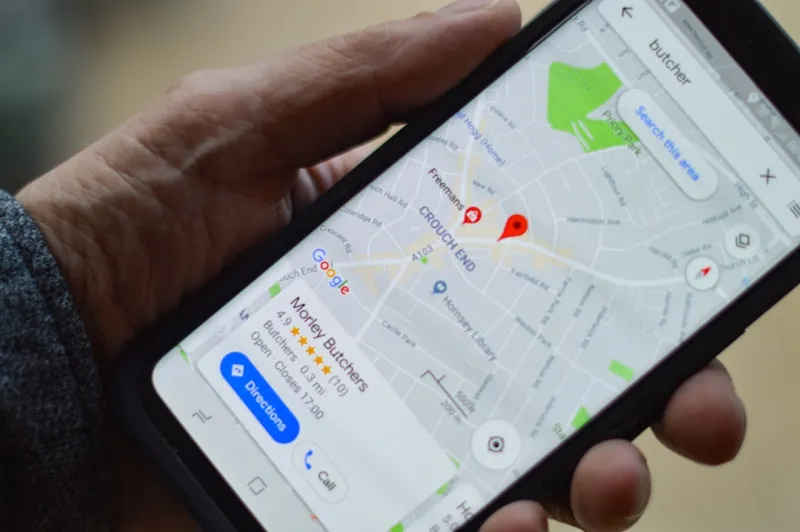
Moreover, search engines have become masters at interpreting “near me” intent. Google’s “local pack” now includes hyper‑local signals like proximity, recent visits, and even foot‑traffic data from Maps. Ignoring these signals means surrendering a high‑intent audience to competitors who are already mapping their services down to the zip‑code level.
Map the micro‑neighborhood: building content clusters at the block level
Traditional content clusters revolve around broad topics (“project management SaaS”). A micro‑cluster, however, starts with a geo‑specific phrase: “project management SaaS for downtown Denver startups” or “HR software for boutique gyms in Austin’s East Side.” Each cluster should include:
- Landing page optimized for the exact geo‑modifier (city + neighborhood + industry).
- Three to five supporting blog posts that answer hyper‑local questions (e.g., “Best coworking spaces for SaaS founders in Capitol Hill”).
- A Google Business Profile entry that mirrors the landing page’s NAP (Name, Address, Phone) details, even if it’s a virtual address for a sales rep.
These clusters create a dense web of relevance that signals to Google that you’re the authority for that specific slice of the market.
Google Business Profile: the untapped canvas
Most SaaS marketers treat the Google Business Profile (GBP) as a static listing. In reality, it’s a dynamic content hub that can host posts, Q&A, and even product demos. Here’s how to turn it into a conversion machine:
- Geo‑specific posts: Publish weekly updates that reference local events (“Join us at the Austin Startup Week demo day”).
- Service areas beyond the physical office: List “Remote teams in Dallas” and “Hybrid workplaces in Charlotte” as service zones.
- FAQ schema directly in GBP: Answer questions like “Does your software integrate with QuickBooks for Boise accountants?”
By keeping your GBP fresh and hyper‑local, you not only improve rankings in the local pack but also provide prospects with the exact information they need before they even click through to your website.
Leveraging community partnerships and local events
Think of community partnerships as the social proof engine for micro‑geotargeting. When a local Chamber of Commerce, industry meetup, or even a neighborhood coffee shop mentions your SaaS in their newsletter, search engines pick up those citations as trust signals.
Start small: sponsor a monthly “Tech Tuesday” meetup at a co‑working space, provide a free trial for attendees, and ask the host to include a backlink to your hyper‑local landing page. The result is a two‑fold win—real‑world leads and a backlink that reinforces your geo‑relevance.
Geo‑fencing and proximity signals for SaaS onboarding
Geo‑fencing allows you to trigger marketing messages when a prospect enters a predefined radius around a location. Imagine a SaaS that offers a free 30‑day trial for “restaurants within 5 miles of the new downtown food hall.” When a restaurant manager walks past the food hall, they receive an SMS or in‑app notification with a tailored offer.
This tactic blends offline behavior with online intent, creating a seamless path from “I’m nearby” to “I’m signing up.” Pair geo‑fencing with a landing page that’s already optimized for that micro‑area, and you have a conversion funnel that feels almost magical.
Data‑driven micro‑targeting: using structured data and mobile‑first tactics
To make search engines understand your hyper‑local intent, you need to speak their language—structured data. The structured data playbook shows how to implement LocalBusiness schema, but you can take it a step further by nesting geoCoordinates for each micro‑landing page. This tells Google exactly where your service is anchored, boosting relevance for “near me” queries.
Don’t forget the mobile‑first angle. Most “near me” searches happen on smartphones, so page speed, responsive design, and AMP (or similar lightweight frameworks) are non‑negotiable. The mobile‑first SEO strategies guide outlines how to prioritize Core Web Vitals, but for micro‑targets, you also need to ensure that local maps, click‑to‑call buttons, and schema snippets load instantly on a 3G connection. A slow page at the moment of intent can instantly push a prospect to the next competitor.
Measuring success: the micro‑KPIs that matter
Traditional SEO metrics—organic traffic and domain authority—don’t capture the nuance of hyper‑local performance. Instead, track:
- Local Pack Impressions: How often does your GBP appear for the targeted block‑level queries?
- Click‑to‑Call Rate: Percentage of map clicks that result in a phone call from the specific radius.
- Geo‑Conversion Rate: Conversions (free trial sign‑ups, demo requests) that originated from a micro‑landing page.
- Event‑Driven Leads: Leads generated from community partnership mentions or geo‑fenced offers.
Combine these with Google Analytics’ “User‑ID” feature to tie anonymous visits back to a specific geographic segment, giving you a crystal‑clear view of which blocks are delivering the highest ROI.
Putting it all together: a 30‑day hyper‑local sprint
Ready to test the theory? Here’s a quick, actionable playbook you can roll out in a month:
- Week 1 – Research & Mapping: Identify three high‑value neighborhoods where your target personas congregate. Use Google Trends and local business directories to validate search volume for “your SaaS + neighborhood.”
- Week 2 – Build Micro‑Landing Pages: Create a dedicated page for each neighborhood, embed LocalBusiness schema with precise geo‑coordinates, and publish two supporting blog posts per page.
- Week 3 – GBP Optimization & Partnerships: Update your Google Business Profile with neighborhood‑specific service areas, post weekly updates tied to local events, and secure at least one backlink from a community organization.
- Week 4 – Activate Geo‑Fencing & Measure: Deploy a geo‑fence around each neighborhood using a marketing automation platform. Launch a targeted offer, then monitor the micro‑KPIs outlined above.
If you follow this sprint, you’ll likely see a lift in local pack impressions, a spike in click‑to‑call activity, and a handful of qualified leads that arrived at your site with a hyper‑local intent you couldn’t capture before.
Final thoughts
Hyper‑local SEO isn’t a gimmick; it’s a logical evolution of the “near me” phenomenon that’s reshaping how SaaS companies acquire customers. By treating each city block as a mini‑market, layering structured data, leveraging community ties, and deploying proximity tech, you create a relevance engine that outpaces generic national campaigns. The next time you hear a prospect say, “I’m looking for a solution that understands my local market,” you’ll have a ready‑made answer—right down to their street corner.

When it comes to the world of blogging and writing, Rose DesRochers is a name that stands out. Her passion for creating quality content and connecting with her audience has made her a trusted voice in the industry. Aside from her skills as a writer and blogger, Rose is also known for her compassionate nature.
Related Posts

The Hyperlocal Content Hub Playbook: Dominate Neighborhood Search
Discover a fresh local SEO strategy: hyperlocal content hubs. By creating micro‑focused pages for ... Read More
Why Local SEO Needs a Human‑Centric, Mobile‑First Makeover
A human‑centric, mobile‑first strategy is the secret sauce for local SEO success—learn how emp... Read More

Community Partnerships: The Hidden Engine Behind Local SEO Success
Discover a fresh approach to local SEO that goes beyond citations, leveraging community partnerships... Read More
Top Posts

How Social Listening Turns Noise into SaaS Growth
Learn why listening to social conversations—rather than just broadcasting—can drive product insights, amplify social proof, and align sales and marketing fo...Read More

Semantic Topic Clusters: Future‑Proofing Your Google SEO
Learn how to build semantic topic clusters that turn isolated pages into an authority‑rich ecosystem, boosting Google rankings, traffic, and SaaS growth with ...Read More

Automating Technical SEO in Your SaaS CI/CD Pipeline
Integrate SEO quality gates—crawl budget, schema validation, page speed, canonical logic—directly into your CI/CD pipeline to ensure every release is search...Read More

Hyperlocal SERP Mastery: Winning the 5‑Mile Radius Game
A fresh playbook reveals how hyperlocal SERP features, real‑time inventory feeds, and community‑driven content can turn the 5‑mile radius into a gold mine...Read More
0 Comments
Post Comment
You will need to Login or Register to comment on this post!